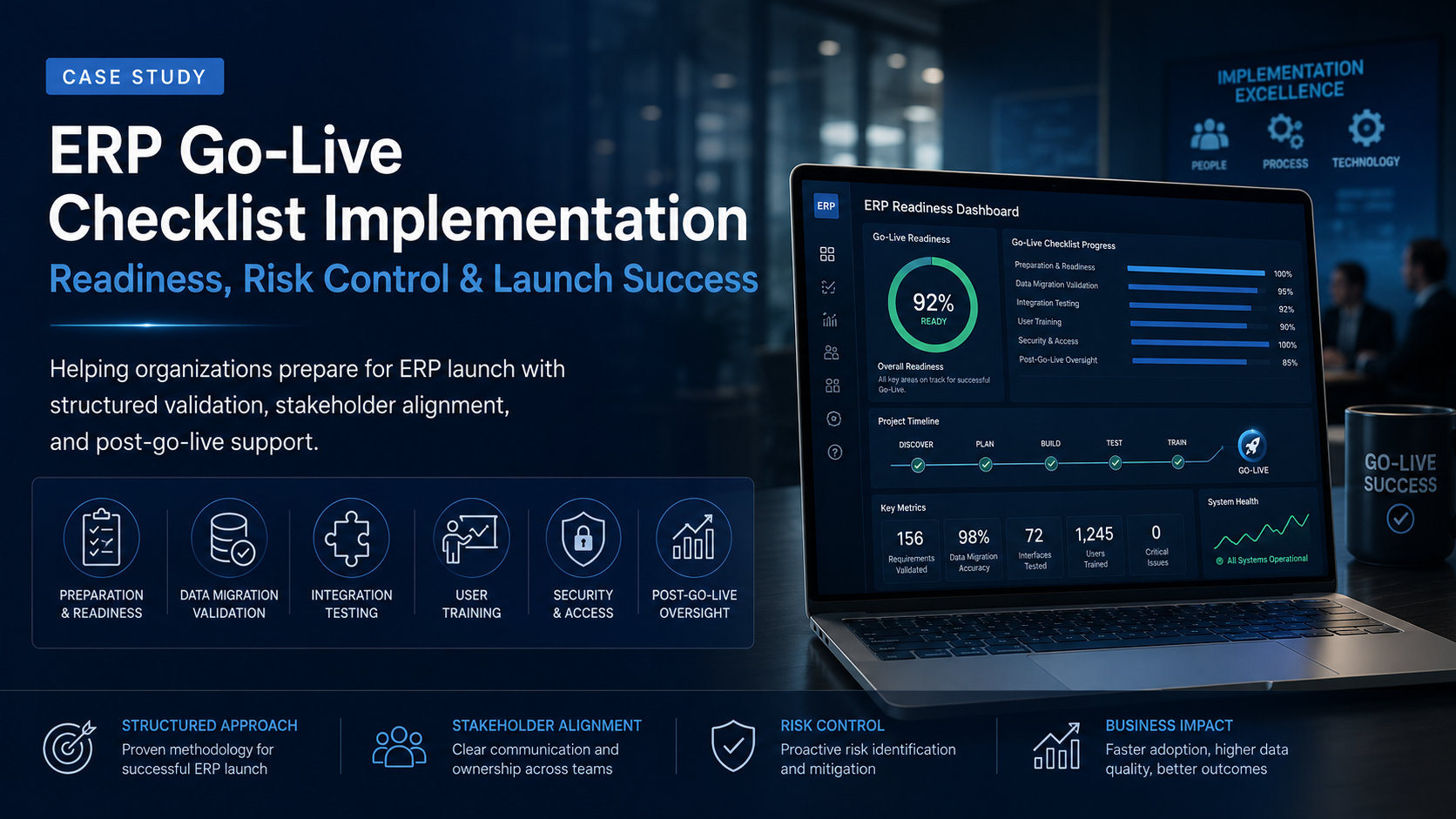
The Importance of a Go-Live Checklist for ERP Implementation
Implementing an ERP system is a transformative but complex process. The go-live phase is the critical moment where planning, testing, training, data, integrations, and business readiness come together.
A well-prepared go-live checklist helps organizations move from implementation to production with better control and fewer surprises.
Why a Go-Live Checklist Matters
An ERP go-live checklist acts as a final readiness framework. It ensures that every important task is reviewed before the system is used by real users for live business operations.
Without a checklist, teams may miss important items such as role permissions, data validation, user training, report accuracy, integration testing, backup planning, and support readiness.
Key Benefits of a Go-Live Checklist
- Preparation and Readiness
A structured checklist ensures that all major areas are aligned before launch. This includes configuration, data migration, testing, user access, reports, workflows, and training.
It helps prevent system errors, downtime, and last-minute confusion.
- Risk Management
This reduces post-launch disruption and improves launch confidence.
- Seamless Communication
This improves collaboration, accountability, and execution speed.
- Data Validation
Proper validation helps avoid reporting errors and operational issues after launch.
- Change Support
Training, user guides, support channels, and communication plans help users adapt to the new system and reduce resistance.
- Post-Go-Live Oversight
This ensures that the ERP system continues to support business goals after production launch.
Final Thoughts
A go-live checklist is indispensable for ERP implementation success. It streamlines preparation, reduces risks, supports stakeholders, validates data, and ensures smoother operations after launch.
Investing time in a strong checklist helps organizations turn ERP goals into real business value.